One graph, many languages
Keep Swift's existing analysis while mapping JavaScript, TypeScript, HTML, CSS, Python, PHP, Java, C#, and Objective-C into the same city.
Explore your codebase as a city. Trace dependencies and review the evidence behind AI changes.
Apple silicon · Public preview · GitHub release
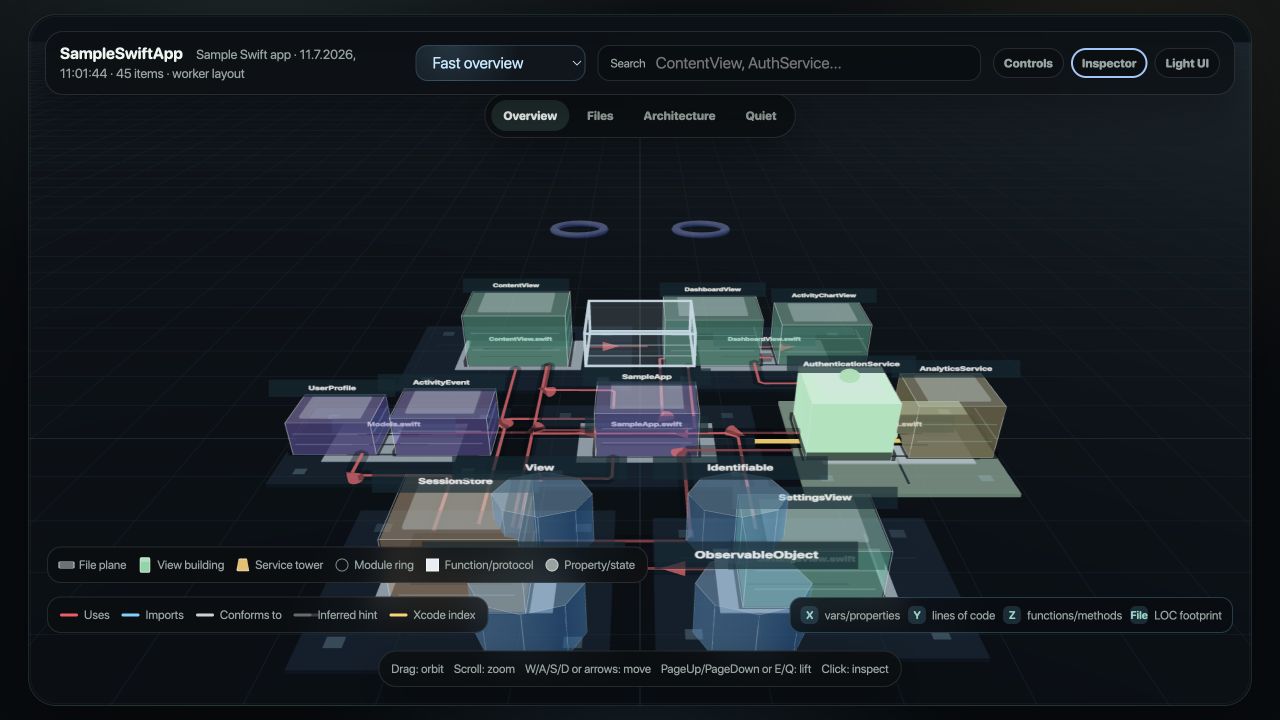
See how the map connects your project’s structure to source and review evidence.
The workflow: Open a local repository, locate a feature in the map, then inspect its source and review evidence. Explore the step-by-step walkthrough ↓
Find where a feature lives, understand what it touches, and inspect the evidence before changing it.
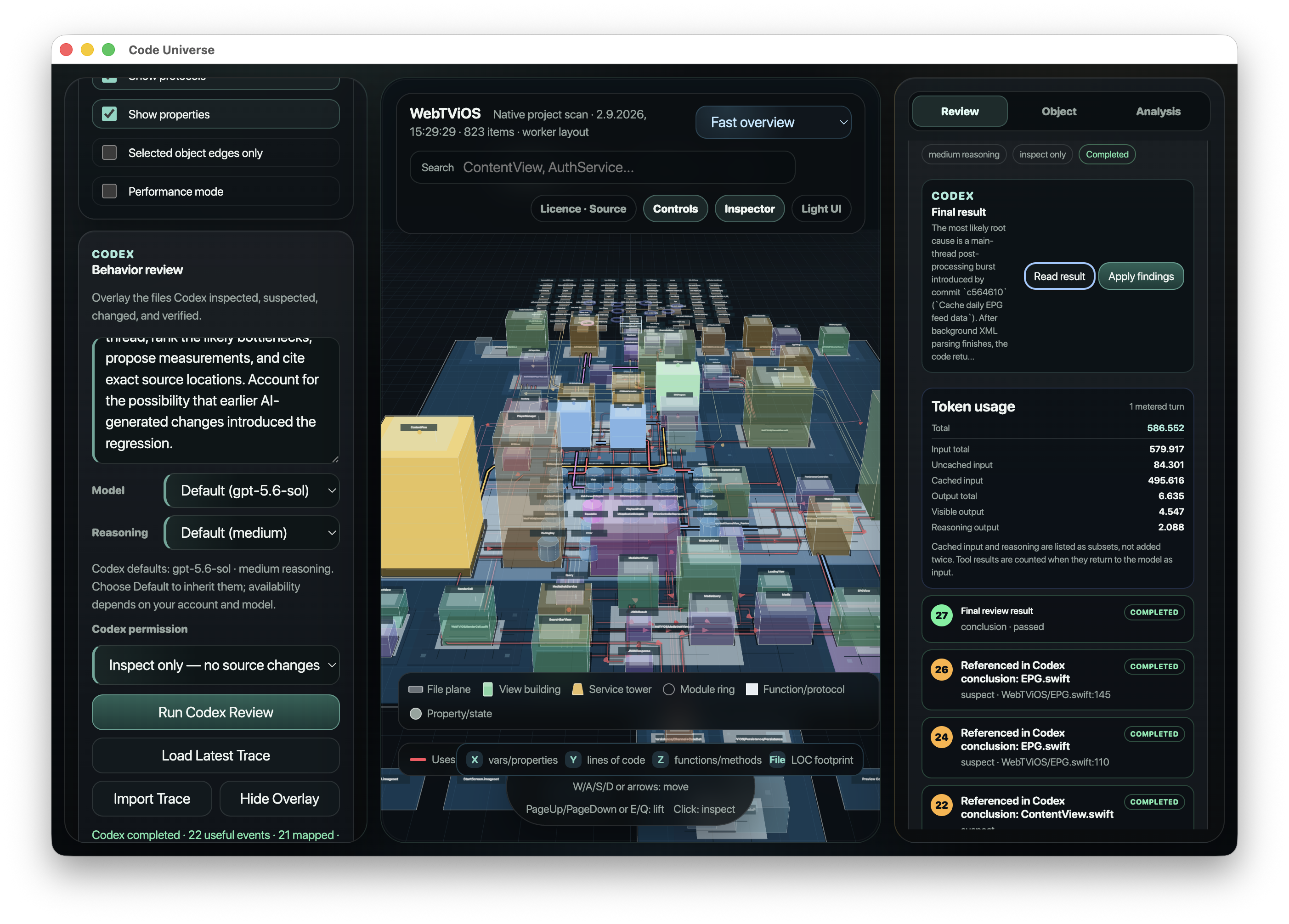
The EPG spans views, a fetcher, a parser, and a cache. Start with the map to see the pieces together.
Open full-size screenshot ↗Trace the paths beyond a single file to guide your investigation. Verify important relationships in source.
Open full-size screenshot ↗Read the conclusion and follow the source inspections before accepting a proposed change.
Open full-size screenshot ↗WebTViOS · Actual inspect-only investigation · Enlarged details from the original screenshot
A shipping Swift app. An EPG stall after downloading new data. Code Universe reconstructed the feature, traced the main-thread processing chain, and connected it to an earlier caching change—with 27 retained evidence events.
The result is a source-supported diagnosis, not a measured speed improvement. No WebTViOS files were changed. This founder-owned study also records false-positive graph relationships: important connections still need source verification.
Read the WebTViOS case studyMap Swift, JavaScript, TypeScript, HTML, CSS, Python, PHP, Java, C#, and Objective-C projects, then connect searches, source inspections, edits, diffs, tests, and conclusions to the same architecture.

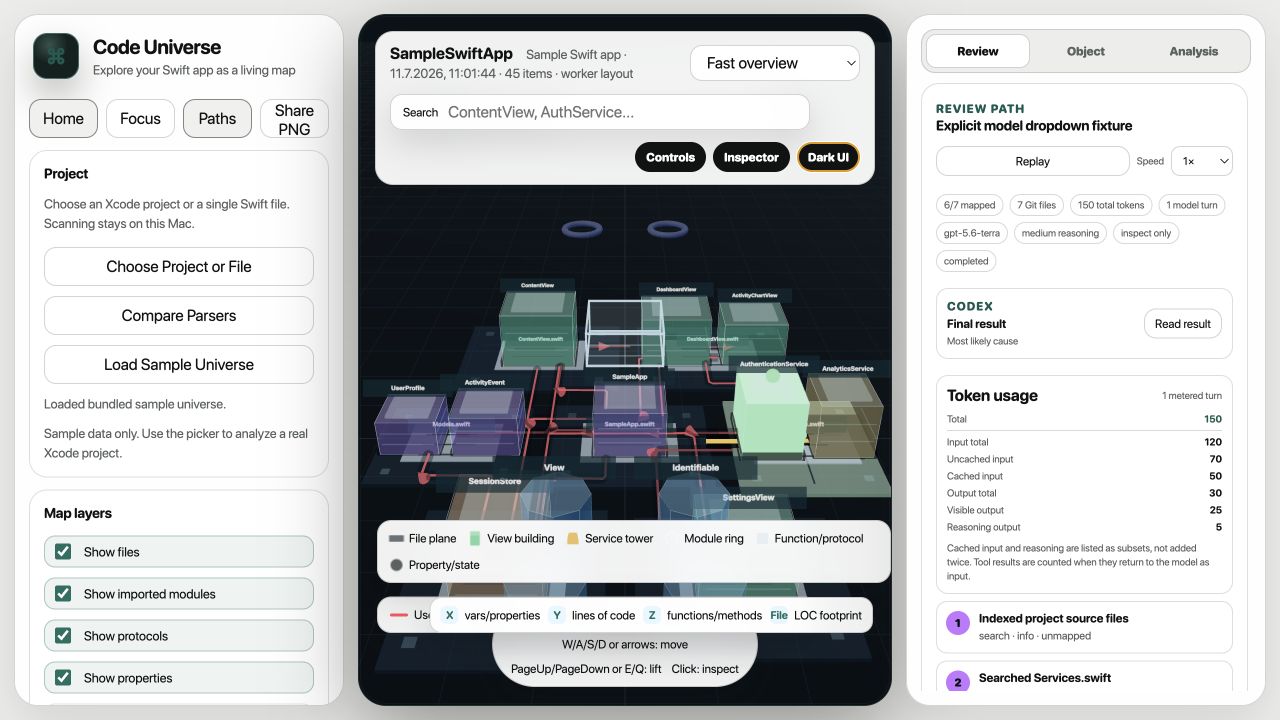
Keep Swift's existing analysis while mapping JavaScript, TypeScript, HTML, CSS, Python, PHP, Java, C#, and Objective-C into the same city.
Exact ranges, stable identities, DOM nesting, source metrics, and image assets make every selected object traceable back to its file.
Use the optional Tree-sitter WASM pass for supported languages, inspect grammar coverage, and see parser-only nodes, edges, and diagnostics.
Replay searches, inspections, edits, builds, tests, diffs, token use, and source jumps without losing the architecture context.
Move from the architectural landscape to a review trace, selected object, parser comparison, project statistics, and exact source—without losing the project context.
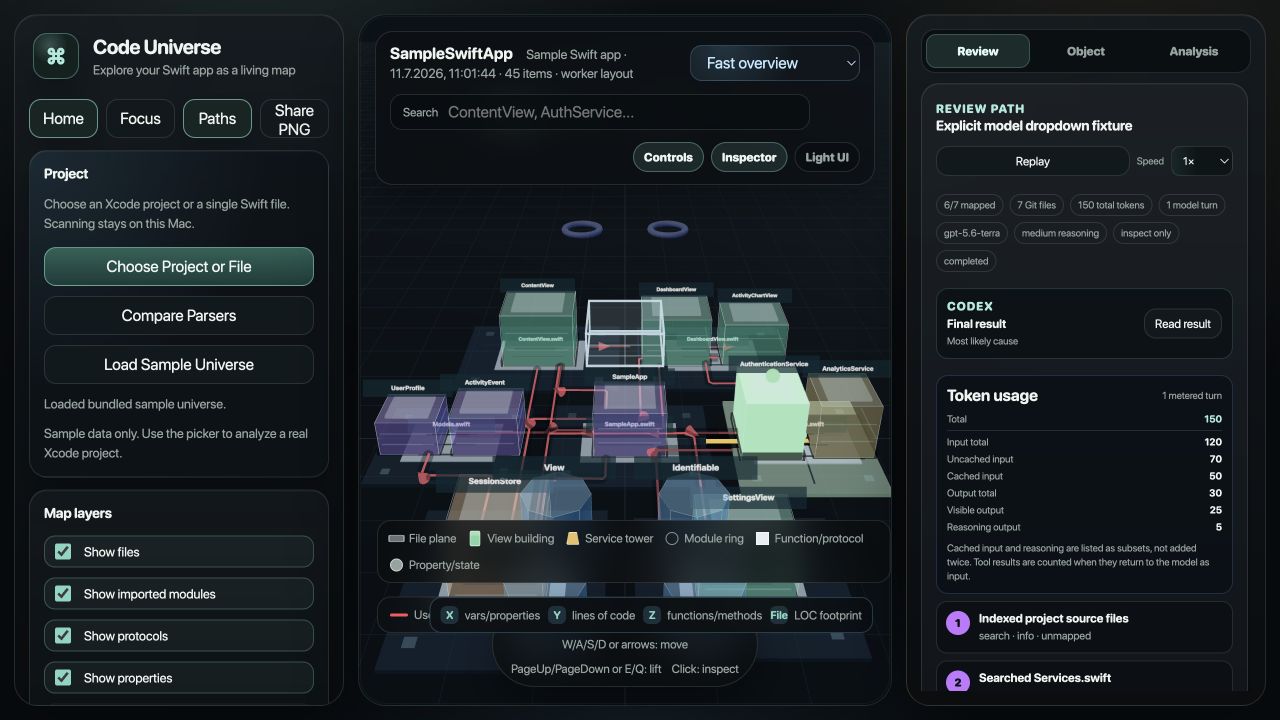
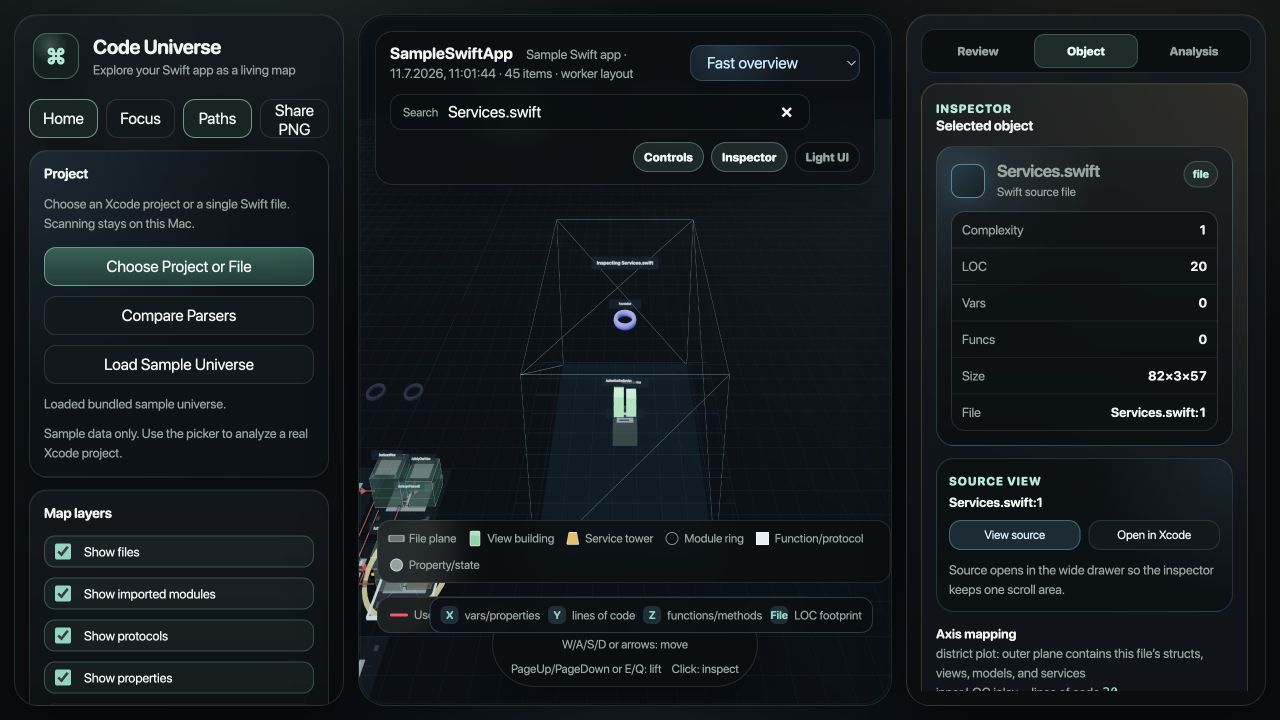
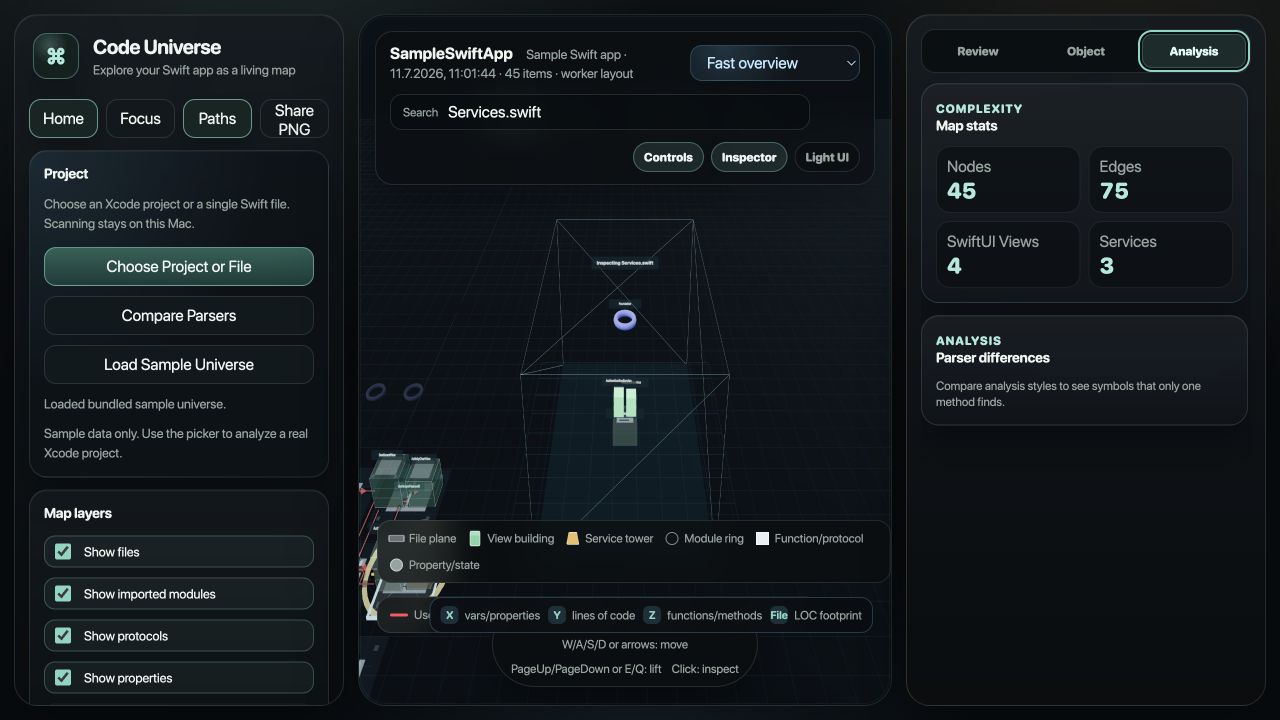
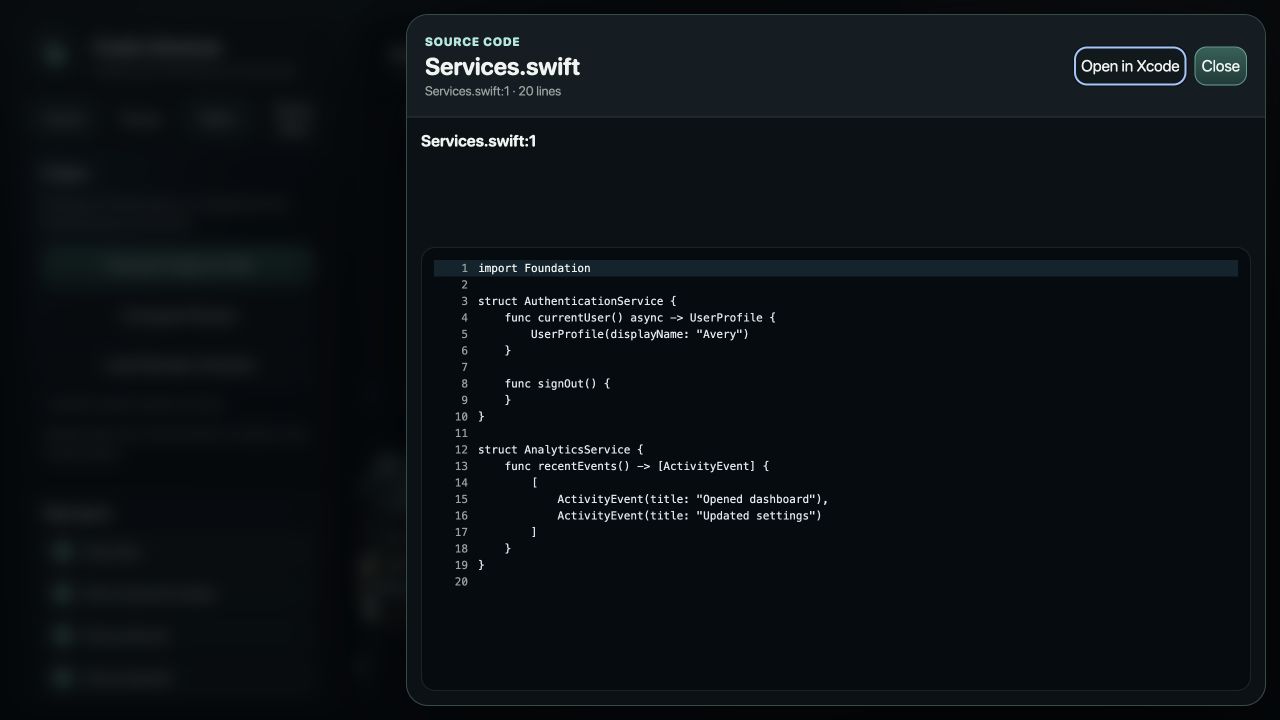
Open a repository and map its languages, files, symbols, assets, metrics, and relationships without uploading source code.
Find entry points, dense features, outsized types, structural gaps, and dependency paths without hunting through tabs.
Ask Codex to inspect or fix a behavior while its searches, source reads, edits, and verification remain connected to the map.
Read the conclusion, inspect the diff and tests, and decide whether the proposed work is safe to continue.
Install the signed Apple-silicon Mac preview or clone the repository, then load a codebase you already need to understand. Project analysis stays on the machine.
Trace an unfamiliar feature, investigate a proposed change, or replay an AI-agent review. A real decision is more useful than a polished demo.
Open a GitHub issue with the task you attempted, the useful moment, and the point where the map stopped helping. That feedback will determine the next product work.
The source is available under BSL 1.1. Evaluation and qualifying personal use are available now; company and client production use requires a separate licence. There is no automated checkout during validation.